
What the "strengthening customs enforcement" executive order means for international entities

Jun 15, 2026

4 minutes

blog_june_15th

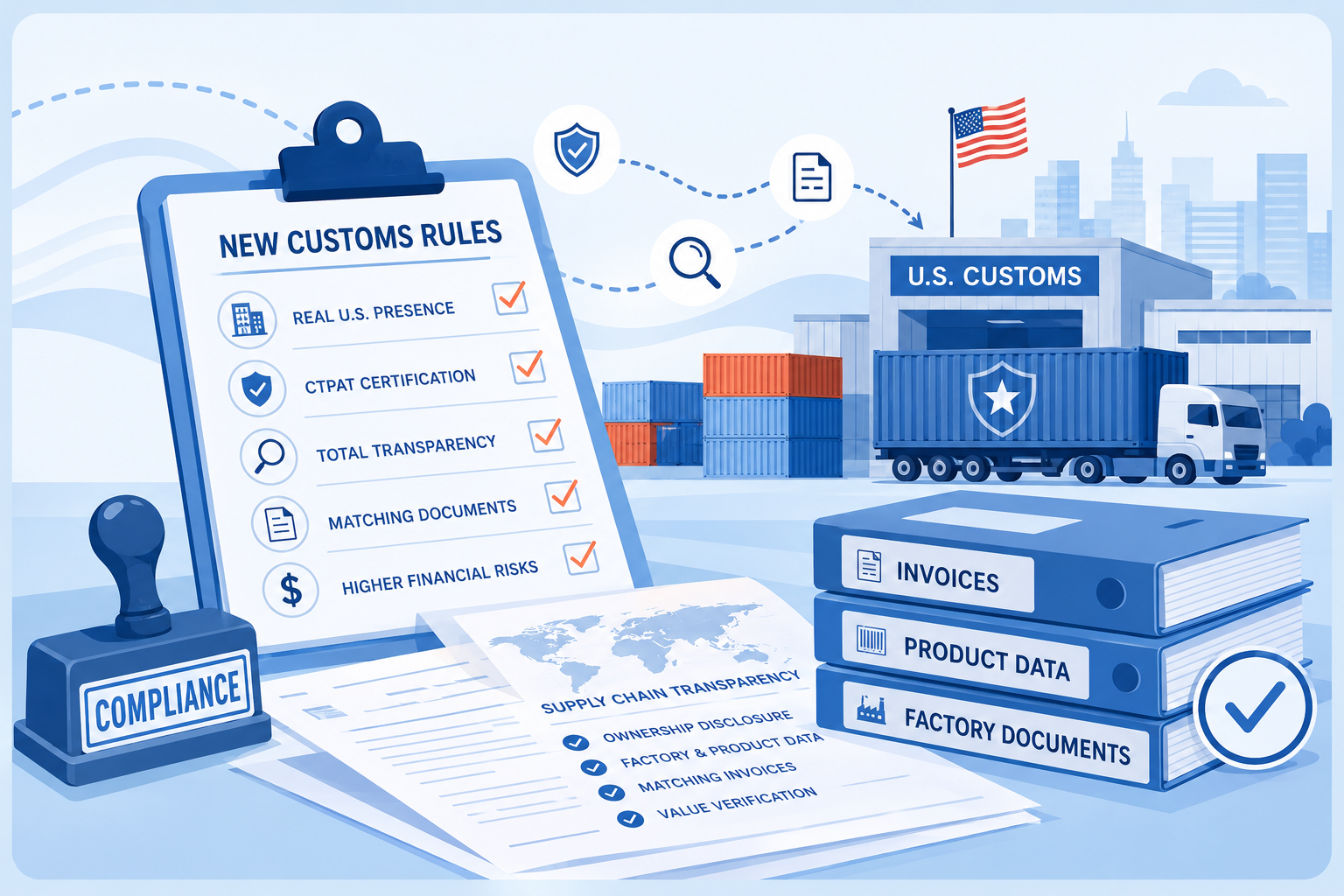
On June 3rd President Trump signed the "Strengthening Customs Enforcement" Executive Order (EO), completely changing the rules for how goods enter the United States.

Designed to eliminate duty evasion, undervaluation, and loophole exploitation, this order fundamentally rewrites the rules for Importers of Record (IORs). the entities legally responsible for imports.

If your international business currently imports into the U.S. as a foreign entity, utilizes a U.S. subsidiary, or plans to set up a new U.S. company to clear goods, the old way of doing business is officially over.

Strict new limits on foreign importers

The main goal of this new order is to crack down on foreign companies that act as importers without having a real, physical presence in the U.S.

Foreign importers can no longer use "informal entries," which is the low-oversight track usually used to ship high volumes of low-value goods.
Foreign companies can no longer get standard customs bonds without special permission. Instead, they must be fully certified under the CTPAT safety program or use a customs broker who is.
A Real Physical Presence is Required: You can no longer just use a U.S. "shell company" (a business that only exists on paper) to get around these rules. To count as a true U.S. importer, your company must have a real office in the U.S., hold real assets on US soil, and be owned by U.S. citizens or legal residents.

The new "total transparency" mandate

U.S. Customs is ending the traditional honor system. Importers can no longer just declare what they are bringing in and how much they think it is worth.

Instead, the government demands absolute transparency. Moving forward, you must:

Disclose exactly who owns and profits from every piece of your supply chain.
Provide product data down to the exact factory line and product code.
Hand over the exact same invoices your foreign factory gave to their own local customs office. If the paperwork doesn't match perfectly, your goods will be stopped.

Higher financial risks

The cost of making a mistake or ignoring these rules is going to be incredibly high.
Fines will double as the government is setting a minimum penalty floor. Fines cannot be lower than 50% of the maximum penalty. The historical leniency for companies that accidentally make a mistake and report it themselves is gone.
Zero Tolerance as “repeat offenders” will face maximum penalties with no exceptions.
Customs brokers now face heavy penalties if their clients break the rules. Because of this, brokers will become highly selective and will refuse to work with international clients who cannot prove their assets and paperwork are legitimate.

Key deadlines

This order is moving very fast:
1.
Within 90 days: The strict new 50% minimum fines begin, and the "matching paperwork" rule goes into effect.
2.
Within 180 days: The government will launch a rolling vetting system, review all existing importers, and enforce the rules requiring real U.S. assets.

How TABS keeps your business moving

Setting up a business on paper is no longer enough to clear U.S. customs. That is where TABS comes in. We handle the administrative heavy lifting to build a real, legally sound foundation for your company in the United States.  

TABS helps you:
Handle corporate governance: We manage your U.S. company setup, annual filings, and corporate secretarial work to ensure your business stays legal and compliant.
Provide a real U.S. office presence: We give you a physical U.S. business address, handle your corporate mail, and take care of your daily back-office administration.
Connect you to vetted experts: We introduce you directly to our trusted network of logistics companies and licensed customs brokers who will manage your shipping and customs bonds.

Summary

If you sell goods into the U.S. through an international structure, you must check your setup immediately. Having real assets in the U.S., upgrading your bonds, and proving your transparency are no longer optional, they are the strict requirements for doing business in the United States.
Contact TABS today for a full review of your import setup to ensure your business stays compliant and protected.

Explore more insights

Related articles you might find useful
FDA
Blog_carmen9thofjune

Exporting dietary supplements to the U.S. market? Avoid these 3 regulatory pitfalls

Jun 8, 2026
By Carmen Muñoz-Vicedo
Failing to meet FDA standards can instantly disrupt your U.S. export operations. This guide breaks down three critical compliance areas to keep your dietary supplements on American shelves.
Read Article
2 minutes